Every engineering decision is a compromise.
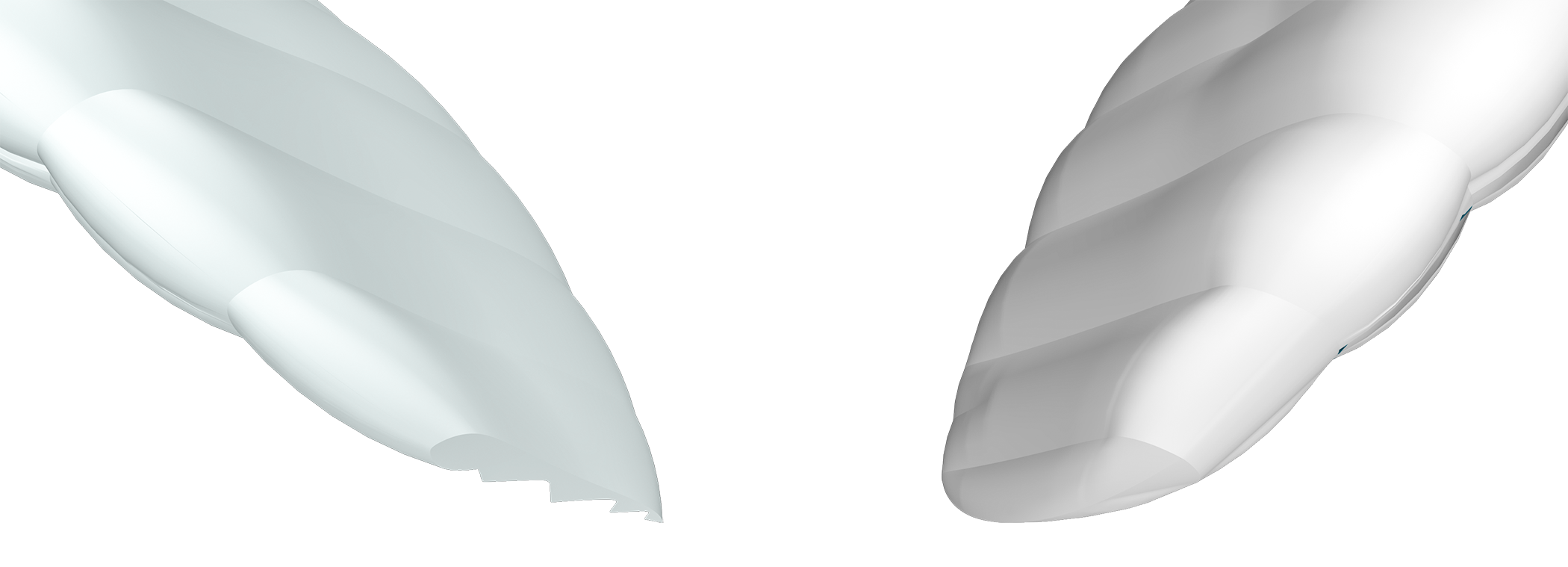
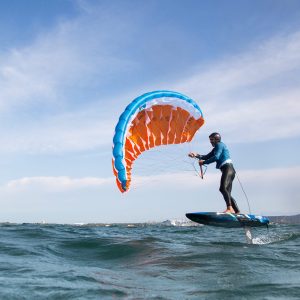
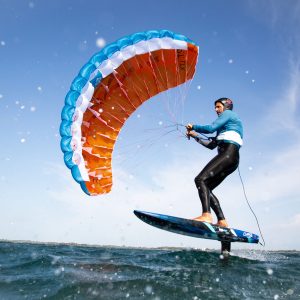
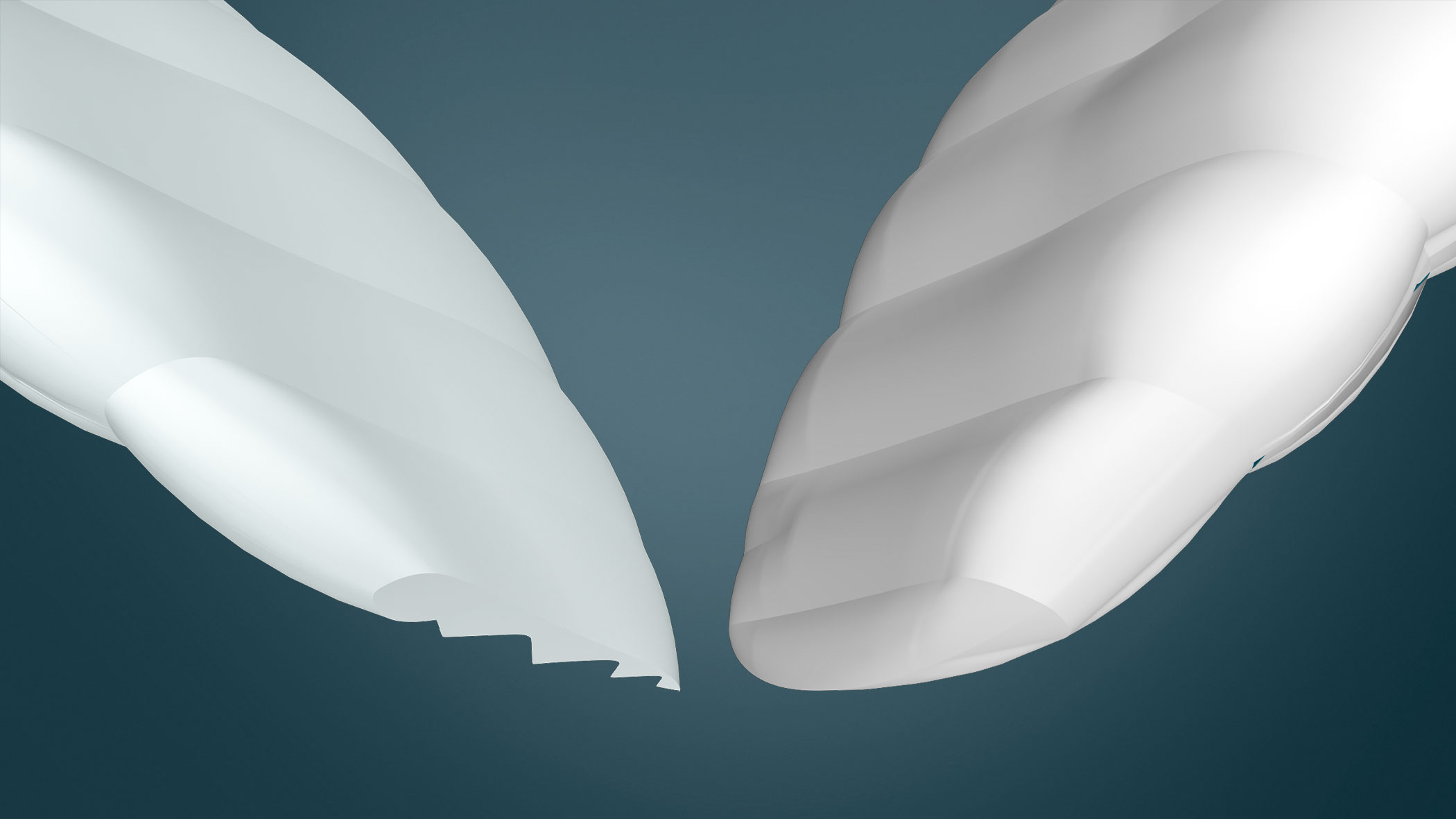
One of the first things riders notice when comparing the Triple Seven P.T. LTX with the P.T. Hybrid and P.T. Skin is the wingtip construction.
The Hybrid and Skin feature a fully inflated last cell, while the LTX intentionally uses an open single-surface tip.
At first glance, many riders immediately recognise the most obvious advantage of the LTX:
“It doesn’t hold water.”
That’s absolutely true, but it’s only one part of the engineering story. Like every aerodynamic decision, each solution offers distinct advantages while introducing its own compromises. At Triple Seven, we don’t design products around a single specification. We design them around the complete riding experience.
Let’s look at why.
Why Wingtip Design Matters
Aircraft engineers have spent more than a century refining wingtip geometry because the outer section of a wing has a disproportionate influence on its aerodynamic behaviour.
The wingtip affects:
lift distribution
induced drag
steering response
stability
overall aerodynamic efficiency
Although a parawing is very different from an aircraft wing, the same aerodynamic principles apply. The cleaner the airflow remains around the wingtip, the more efficiently the wing converts airflow into usable lift and control.
Why Hybrid & Skin Use an Inflated Last Cell
A Stable Aerodynamic Wingtip
An inflated last cell maintains a defined aerodynamic profile all the way to the tip.
Instead of ending with a flexible sheet of fabric, the airflow follows a stable three-dimensional shape.
This contributes to:
– cleaner airflow
– improved lift distribution
– reduced local flow separation
– higher aerodynamic efficiency
– The wingtip is one of the most aerodynamically sensitive areas of any lifting surface. Even relatively small improvements in this region can noticeably influence how a wing feels in the air.
Maintaining an Efficient Airfoil
A fully supported tip is better able to preserve its intended airfoil shape throughout a wide range of riding conditions.
Rather than collapsing or deforming under changing loads, the wingtip continues to contribute efficiently to the overall lift distribution.
For the rider, this translates into:
– stronger upwind performance
– improved high-speed efficiency
– more consistent power delivery
– a more precise feeling in gusty conditions
– Sharper Steering Response
– One of the most noticeable differences is handling.
Because the wingtip maintains its structural shape, steering inputs are transferred more directly into wing rotation.
The result is:
– quicker steering response
– tighter turning radius
– more precise carving
– the ability to rotate the wing with very little delay
– Many riders describe this feeling as being able to “turn the wing on the spot.”
Better Touch-and-Go Recovery
Every parawing rider eventually touches a wingtip to the water.
When that happens, an inflated outer cell tends to maintain its shape rather than collapsing immediately. Instead of catching water instantly, the tip is more likely to skim across the surface and recover naturally, helping the rider continue the manoeuvre with minimal interruption.
Reduced Flutter
A pressurized wingtip remains tensioned during flight.
Compared to an unsupported fabric edge, this significantly reduces flutter.
Less flutter means:
– smoother airflow
– reduced vibration
– quieter flight
– a cleaner aerodynamic profile
– Besides improving comfort, reducing unnecessary fabric movement also helps the wing maintain more consistent aerodynamic characteristics.
The Trade-Off
Every benefit comes with a cost.
If water enters the final cell after a crash, it must drain before the wing returns to its minimum flying weight. To minimise this disadvantage, Triple Seven developed one of the most effective drainage concepts available in a ram-air parawing. Large drainage openings and full-span evacuation channels allow water to leave remarkably quickly. While no enclosed cell can drain instantly, the Triple Seven drainage system significantly reduces the recovery time after water contact.
Why the LTX Uses an Open Wingtip
The P.T. LTX was never designed to replace the Hybrid or the Skin.
Its purpose is different.
The open wingtip is a deliberate engineering solution that prioritises simplicity, practicality and rapid recovery after water contact.
Instant Water Release
Because the outer tip is not enclosed, there is virtually no water trapped inside the wingtip.
As soon as the wing leaves the water, the tip is immediately free from retained water.
This offers clear advantages for riders who frequently:
– ride breaking waves
– redeploy repeatedly
– experience frequent water contact
– prioritise effortless handling over maximum aerodynamic refinement
– The open wingtip also means giving up some aerodynamic refinement.
Compared with the inflated-tip construction, the LTX sacrifices a small amount of:
– steering precision
– turning authority
– aerodynamic efficiency
– overall performance potential
– This is not a weakness.
It is a deliberate design choice that allows the LTX to excel in exactly the conditions it was created for.
For decades, aircraft engineers have invested enormous effort into wingtip design because this small area has a surprisingly large influence on the behaviour of an entire wing. At Triple Seven, we apply the same philosophy. Instead of searching for one “perfect” solution, we engineer every model around a specific riding style.
The Hybrid, Skin and LTX each solve a different problem.
And that’s exactly why they all exist.