I work a regular office job, which means I’m not out riding every time the wind blows. I would describe myself as a low-hour, recreational rider—probably a good reference point for others who don’t get on the water every week.
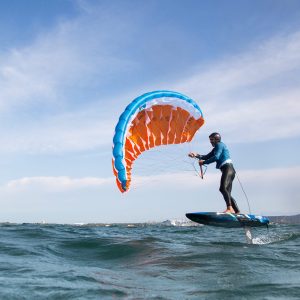
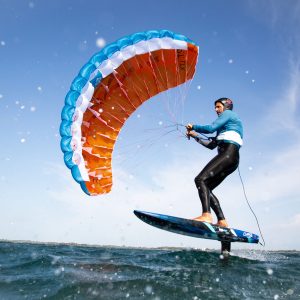
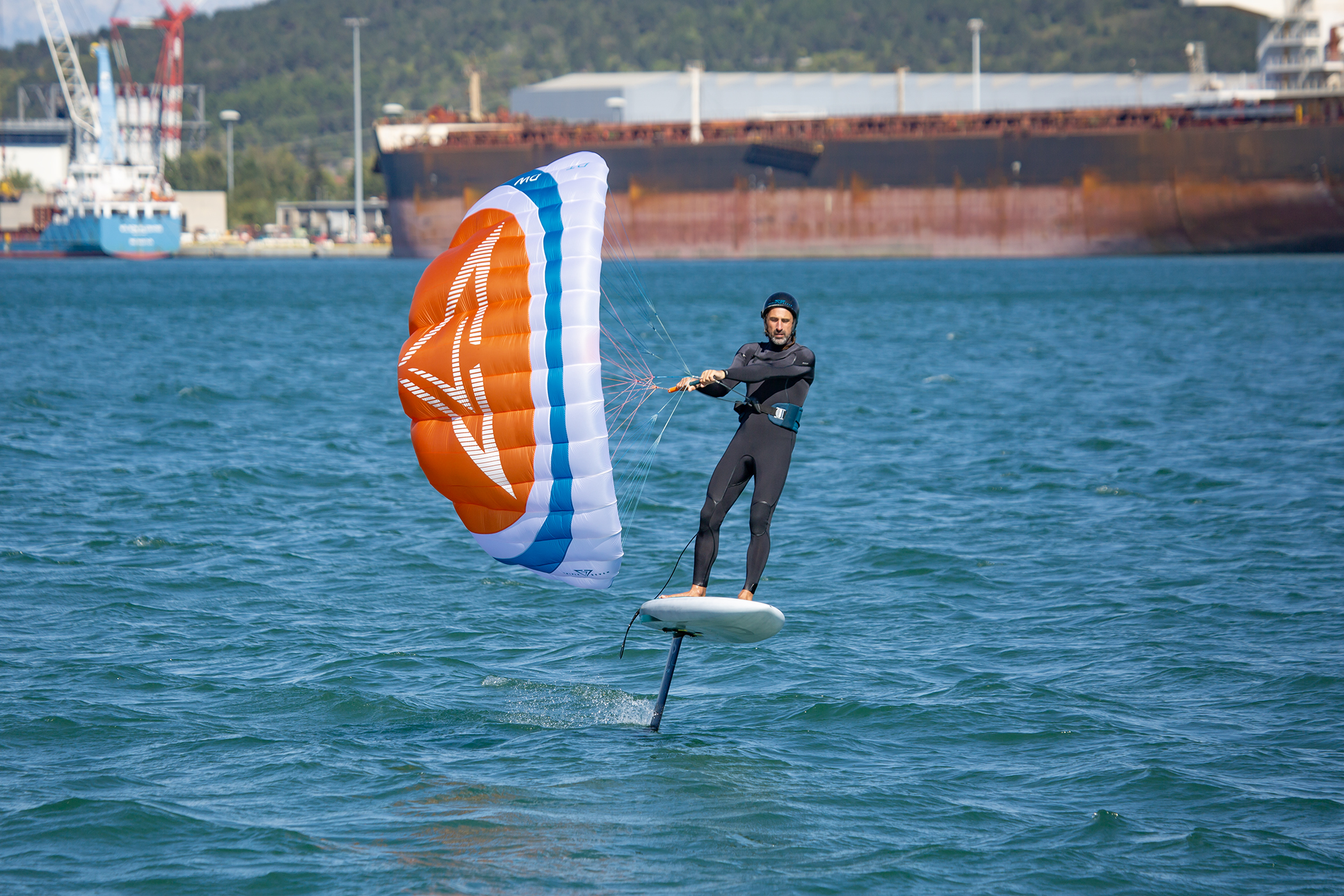
After spending a good amount of time riding the P.T. Skin, I found myself one day at the beach without my usual larger size. The only wing available was the new P.T. UDW 5.7, so I decided to give it a go. This was my first session on the UDW, and below are my impressions—very much from the perspective of a “not-so-good” rider 🙂
Rigging
The first thing I noticed while rigging the wing into the wind was that I needed a more pronounced pull on the A-lines to lift the canopy out of the water. After discussing this with the designer, it became clear why: the UDW has a larger supported leading-edge area, with three rows connected to the A-lines. This changes the angle of attack compared to the P.T. Skin and helps deliver stronger low-end power. So yes, you may need to pull the A-lines more actively at times, but in exchange you get very efficient power once the wing is moving.
Takeoff
On takeoff, the difference was immediately noticeable. The shorter lines and the well-supported leading edge create a very direct connection to the canopy. With a few sharp pulls, the wing loaded quickly and efficiently, and my takeoff felt slightly easier than what I’m used to with the P.T. Skin in similar conditions.
Flying on Foil
I’m used to riding with a harness line, so I hook in right away once the run starts. Compared to the P.T. Skin, the UDW requires more precise angle-of-attack control. After a few foil pumps to fully load the wing, I was able to make solid upwind progress. The thinner profile that gives the UDW its direct pull and ultra-compact packing does mean that it needs more attentive piloting, especially in gusty conditions. That said, the wing doesn’t react abruptly—there is clear feedback through the bar if something is about to happen, giving you time to adjust the angle of attack before any real issue develops. Riders coming from canopies that tolerate being held mostly on the A-lines may need a short adjustment period. As explained by the designer, pushing the wing further toward the front of the power window is part of what enables the UDW’s upwind abilities and it also means it naturally sits more forward so don’t just hold on the front lines for good.
I really enjoyed the upwind rides, although the P.T. Skin still has the edge when it comes to pure upwind efficiency.
Jibes
Jibing felt more technical than with the Skin. The wing tends to sit slightly during the maneuver, so you need to be ready to reconnect with it quickly on the exit. It takes a bit of adaptation, but it’s not a major issue once you know what to expect.
Packing & Redeploying
This is where the UDW truly shines. It packs incredibly small, and redeploying it felt easier for me than with the Skin—especially as someone who doesn’t always pack the wing perfectly. Line management felt more forgiving, although my coil leash certainly didn’t help 🙂
Final Thoughts
Like with any new piece of equipment, a short adaptation period is needed. Based on my very first day on the P.T. UDW, everything felt logical and manageable. For a rider with limited water time, it was reassuring to find that the wing communicates clearly and rewards correct input without being intimidating.
Matjaz Klemencic / Customer service at Triple Seven